
As temperatures continue to rise across the North East, health professionals are warning Newcastle residents to take extra care in the sun as the ongoing heatwave brings unusually high temperatures to the region. Parks, beaches and outdoor spaces have become increasingly crowded as people enjoy the warmer weather, but experts say many are underestimating how quickly sunburn can develop during prolonged exposure.
Although the UK is not often associated with extreme heat, dermatologists say ultraviolet rays can still cause serious skin damage, particularly during heatwaves when people spend extended periods outdoors. Cases of painful sunburn, dehydration and heat exhaustion are expected to rise if residents fail to take basic precautions while temperatures remain high.
Health officials say preventing sunburn is far easier than treating it afterwards, especially as repeated sun damage can increase the risk of premature skin ageing and skin cancer later in life.
Why Sunburn Happens More Easily During Heatwaves.
Sunburn develops when the skin is exposed to ultraviolet radiation for longer than it can naturally protect itself against. During a heatwave, people are more likely to spend hours outside in direct sunlight, increasing the risk of overexposure without realising it.
Many people assume cloud cover or cooler coastal breezes reduce the risk of burning, but UV rays can still penetrate through clouds and reflect off water, sand and pavements. Popular coastal destinations near Newcastle, including Tynemouth and Whitley Bay, may feel cooler because of sea air, but reflected sunlight can intensify skin exposure significantly.
Fair-skinned individuals are generally more vulnerable to sunburn, although experts stress that anyone can suffer skin damage without adequate protection. Children and older adults are particularly at risk because their skin is often more sensitive to prolonged heat and sunlight.
The Best Ways to Prevent Sunburn.
Medical experts recommend avoiding direct sunlight during the hottest part of the day, usually between 11am and 3pm, when UV levels tend to peak. Seeking shade regularly and limiting time outdoors during these hours can dramatically reduce the likelihood of burning.
Applying sunscreen properly is also essential. Dermatologists advise using broad-spectrum sunscreen with at least SPF 30 and applying it generously to all exposed areas of skin around 20 minutes before going outside. Sunscreen should then be reapplied every two hours, especially after sweating or swimming.
Loose-fitting clothing can provide another layer of protection during hot weather. Lightweight long sleeves, sunglasses and wide-brimmed hats help shield vulnerable areas including the face, scalp and shoulders, which are often the first parts of the body to burn.
Hydration also plays a key role during extreme temperatures. Drinking plenty of water helps regulate body temperature and supports the skin during prolonged heat exposure. Health professionals recommend reducing alcohol and high caffeine intake during heatwaves because both can contribute to dehydration.
Outdoor workers, runners and people exercising in direct sunlight are also being urged to take additional precautions, including frequent breaks in shaded areas and carrying water throughout the day.
Common Signs of Sunburn and Heat-Related Illness.
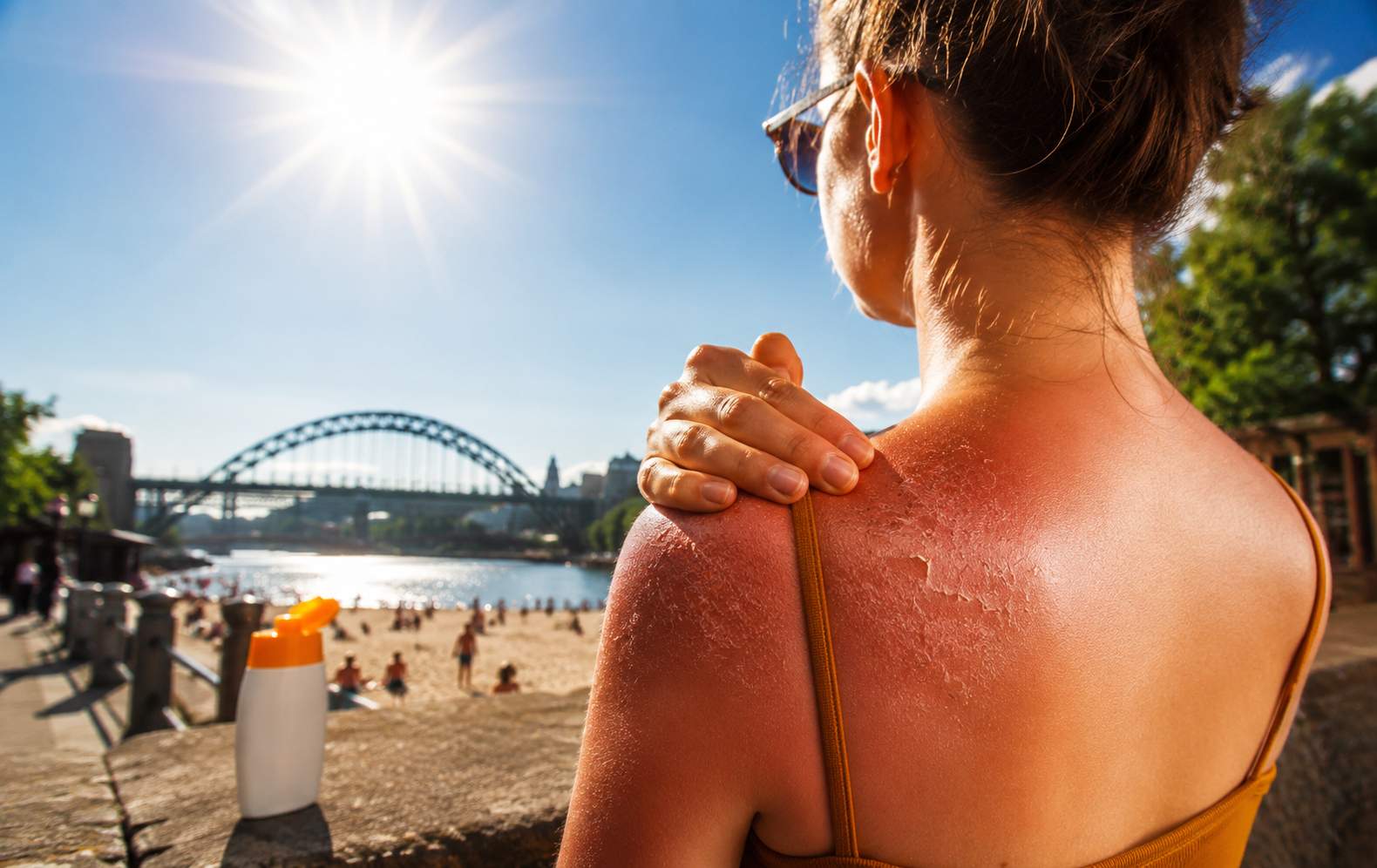
Mild sunburn usually appears as red, tender and warm skin that becomes uncomfortable several hours after exposure. In more severe cases, swelling, blistering and intense pain may develop.
Doctors warn that severe sunburn can also trigger symptoms linked to heat exhaustion, including dizziness, headaches, nausea and chills. These warning signs suggest the body may be struggling to regulate temperature effectively during the heatwave.
People experiencing confusion, severe blistering or persistent vomiting are being advised to seek medical attention quickly. Young children should also be monitored carefully because dehydration and overheating can develop rapidly in high temperatures.
Another major concern during the Newcastle heatwave is dehydration. Dry mouth, dark urine and extreme fatigue can all indicate the body needs fluids urgently. Experts recommend moving to a cool environment immediately if these symptoms begin developing.
How to Treat Sunburn Safely.
If sunburn occurs, quick after care can help minimise discomfort and support recovery. Health experts recommend moving out of direct sunlight immediately and cooling the skin gently using lukewarm water or a cool damp cloth. Very cold water or ice should be avoided because it can further irritate damaged skin.
Moisturising creams or aloe vera gel may help soothe inflammation and reduce dryness as the skin begins healing. Drinking additional water is also important because sunburn can pull fluids toward the skin surface, increasing the risk of dehydration.
Pain relief medications such as ibuprofen or paracetamol can help ease discomfort and reduce inflammation if required. Pharmacists advise following dosage instructions carefully and consulting a healthcare professional if symptoms worsen.
Blisters should never be burst intentionally because this can increase the risk of infection. Allowing the skin to heal naturally while keeping the affected area clean is considered the safest approach.
Experts also recommend avoiding additional sun exposure until the skin has fully recovered. Freshly burnt skin remains highly sensitive and can worsen quickly if exposed to further UV radiation too soon.
Newcastle Residents Urged To Stay Safe in Extreme Heat.
With forecasters predicting continued hot weather across Newcastle and surrounding areas, public health officials are encouraging residents to take sensible precautions while enjoying the sunshine. Pharmacies across the region are already reporting increased demand for sunscreen, cooling products and hydration supplies as temperatures continue to rise.
While many people welcome the warm conditions after months of colder weather, medical experts warn that heat-related illnesses can escalate quickly if symptoms are ignored. Simple steps such as wearing sunscreen, drinking water regularly and seeking shade can significantly reduce health risks during the heatwave.
Residents are being reminded that protecting skin during periods of extreme heat is not only important for immediate comfort, but also for long-term health and wellbeing.
Have you found effective ways to stay cool and prevent sunburn during the Newcastle heatwave? Share your advice and experiences in the comments below to help other readers stay safe this summer.
Health News
How to Prevent and Treat Painful Sunburn This Summer
Advertisement


Comments (0)
You must be logged in to post comments.
Don't have an account? Register here
No comments yet. Be the first to share your thoughts!