
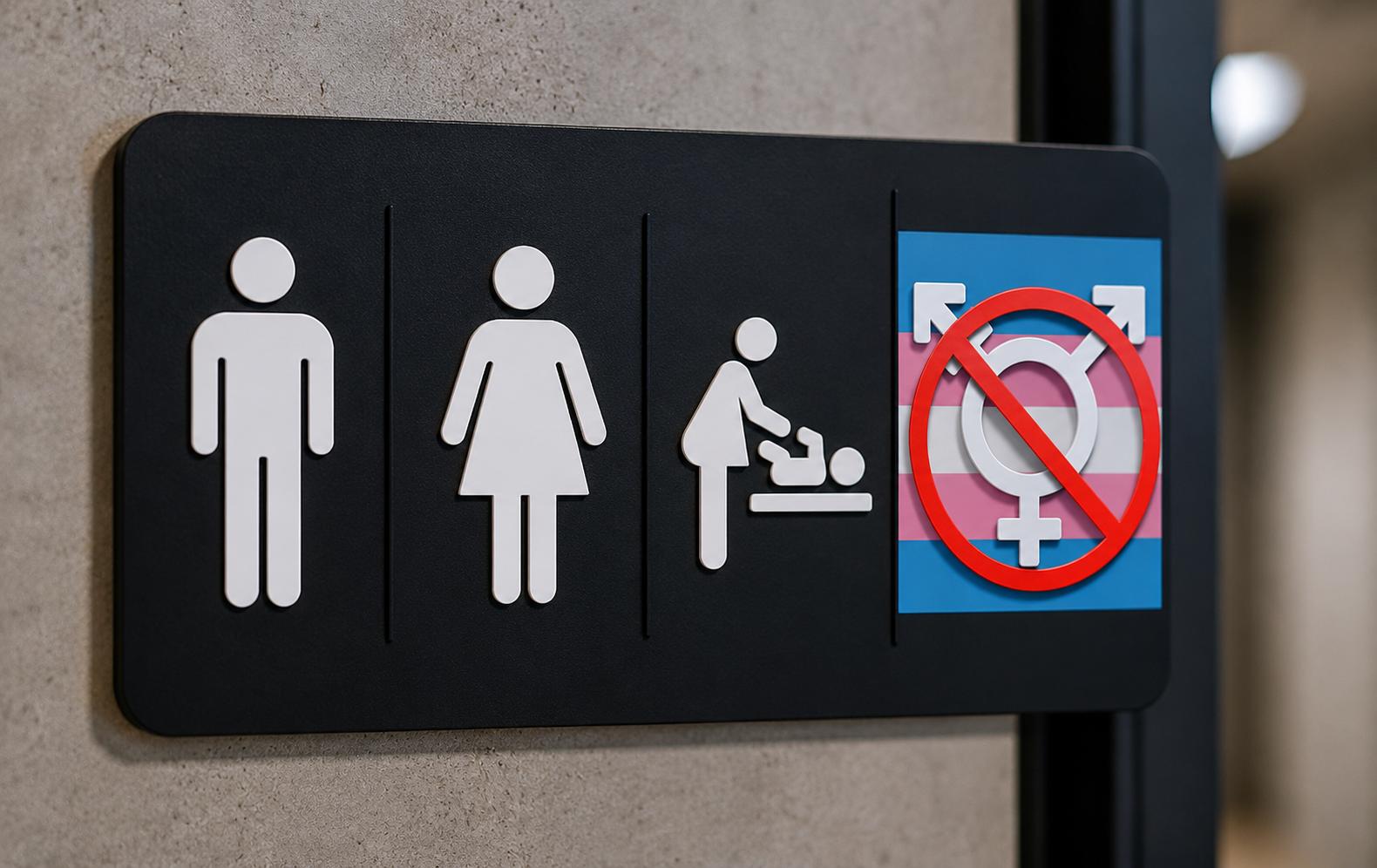
Businesses, LGBTQ venues and public organisations across Newcastle are now facing growing questions over how they manage toilets, changing rooms and other single-sex spaces following newly approved guidance from the Equality and Human Rights Commission.
The updated code of practice confirms that facilities such as toilets and changing rooms should generally be used according to biological sex under the Equality Act. The guidance follows last year’s widely debated Supreme Court ruling which stated that the legal definition of a woman under equality legislation should be based on biological sex.
The issue has already sparked intense discussion across the UK, including in Newcastle upon Tyne where universities, gyms, arts venues and LGBTQ businesses have increasingly adopted gender-neutral spaces in recent years. Supporters of the guidance say it provides long awaited legal clarity, while critics argue it risks making transgender people feel excluded from public life.
The new code, which has now been approved by ministers and placed before Parliament, could affect thousands of organisations ranging from shopping centres and leisure venues to healthcare providers, bars and entertainment spaces.
What the new EHRC guidance says.
Under the updated Equality and Human Rights Commission guidance, single-sex spaces including toilets and changing rooms should generally operate according to biological sex rather than gender identity. This means that a transgender woman who was born biologically male should not ordinarily use female designated toilets or changing facilities.
Instead, organisations are encouraged to provide gender-neutral or alternative facilities where possible. The guidance also stresses that leaving transgender people without any access to suitable facilities could potentially amount to discrimination.
The recommendations include the use of fully enclosed self-contained cubicles with floor-to-ceiling walls and internal sinks for gender-neutral facilities. The EHRC has suggested some organisations may adapt existing disabled toilets or redesign facilities to meet requirements without major structural changes.
In Newcastle, where modern office spaces, student accommodation blocks and arts venues have increasingly moved towards inclusive facilities in recent years, some organisations may now need to review their current policies carefully.
The guidance will become statutory unless MPs or peers raise objections during a 40 day parliamentary review period.
Why the issue is causing debate across Newcastle and the UK.
The debate around transgender rights and single-sex spaces has become one of the most politically sensitive equality issues in Britain. Across Newcastle, reactions to the guidance have reflected the wider national divide.
Some women’s rights campaigners argue the new code strengthens protections for biological women and girls, particularly in spaces such as leisure centres, hospital wards and changing rooms. Others believe the guidance simply reflects what the law already states following the Supreme Court judgement.
However, transgender campaign groups and some equality advocates have warned the changes may increase feelings of exclusion and anxiety among transgender people who already face discrimination in public settings.
Newcastle has a large student population and an active LGBT community, with venues, charities and universities often promoting inclusive policies. Some local organisations may now face pressure to balance legal compliance with maintaining welcoming environments for all visitors and staff.
The debate is particularly relevant in urban centres like Newcastle where public venues frequently serve diverse communities with differing views around gender identity and equality law.
Businesses in Newcastle may need to review facilities.
Legal experts say businesses and public organisations across Newcastle may soon need to assess whether their facilities comply with the updated guidance.
Gyms, shopping centres, entertainment venues, universities and healthcare providers are among the organisations likely to face the biggest practical questions. Many already introduced gender-neutral facilities or inclusive access policies before the Supreme Court ruling and may now need to reconsider their approach.
Some businesses in Newcastle city centre already provide mixed or self-contained toilet facilities, particularly in newer developments and hospitality venues. Others may decide to redesign signage or offer additional private spaces to reduce confusion and potential complaints.
Employment and discrimination lawyers say organisations should avoid delaying decisions while waiting for legal disputes to arise. Clear communication, appropriate signage and thoughtful facility design are expected to become increasingly important over the coming months.
Some businesses may also choose to consult directly with staff and customers before making major changes to policies or building layouts.
LGBTQ venues in Newcastle could see major changes.
The guidance could have a particularly significant impact on LGBTQ venues across Newcastle, especially businesses that already operate gender-neutral toilets or inclusive access policies.
Venues within Newcastle’s well known Pink Triangle area, including The Yard, The Eagle and Rusty's Showbar, and wider nightlife scene have long promoted themselves as safe and welcoming spaces for transgender and non-binary customers. Many already use mixed or self-contained toilet facilities designed to reduce conflict and improve accessibility for all visitors.
Legal experts say the updated guidance does not ban gender-neutral toilets, meaning LGBTQ venues can still legally provide unisex facilities. In fact, many believe the changes may encourage more venues to move towards fully private gender-neutral cubicles rather than maintaining separate male and female spaces.
Some venue owners may now seek legal advice to ensure policies comply with the Equality Act while also maintaining trust with customers and staff.
Critics of the guidance argue transgender people could feel increasingly anxious about visiting bars, clubs and entertainment venues if they fear being challenged while using facilities. Campaign groups have warned this could affect participation in public life and nightlife culture, particularly among younger LGBT communities.
At the same time, some women’s rights groups believe venues should now urgently review any policies allowing access based solely on gender identity rather than biological sex.
For LGBTQ venues in Newcastle, the challenge may involve balancing legal compliance with maintaining inclusive environments that have been central to the city’s LGBT nightlife culture for years.
Supporters say the guidance provides long awaited clarity.
Supporters of the updated EHRC code argue the guidance finally provides clarity after years of uncertainty surrounding the Equality Act and single-sex spaces.
Women’s rights campaigners have repeatedly criticised organisations they believed ignored biological sex protections in favour of gender identity policies. Some groups argued that many public bodies were reluctant to make changes because they feared backlash or public criticism.
Maya Forstater from the campaign group Sex Matters said organisations could no longer claim they were waiting for official guidance before reviewing policies around single-sex facilities. She argued the central principle of the guidance is that biological sex remains legally important within the Equality Act framework.
Supporters also believe the guidance may help reduce legal uncertainty for employers and service providers who previously struggled to interpret equality law consistently.
Across Newcastle, some residents have welcomed clearer rules for schools, sports venues and healthcare settings where questions around changing rooms and toilets have increasingly become part of wider public discussions.
Critics fear transgender people could feel excluded.
Transgender rights organisations and some equality campaigners argue the guidance risks creating additional barriers for transgender people accessing public spaces safely and comfortably.
Campaign group TransActual criticised the code and warned it appeared to weaken protections for transgender people and the wider LGBT community. Campaigners say many trans people already experience harassment or anxiety in public environments and fear the guidance may increase confusion or hostility.
Some equality advocates also worry businesses may interpret the guidance inconsistently, leading to uncertainty or uncomfortable situations for staff and customers alike.
In Newcastle, where many organisations actively promote diversity and inclusion initiatives, some venues may attempt to strike a balance by increasing the availability of gender-neutral facilities rather than relying entirely on traditional male and female spaces.
Arts venues, universities and entertainment spaces across the city have often adopted more inclusive approaches in recent years, particularly among younger audiences who generally express more varied views around gender identity.
Gender-neutral spaces could become more common.
One outcome of the guidance may be the increased use of self-contained gender-neutral facilities in public buildings across Newcastle and the UK.
The EHRC guidance specifically recommends private lockable cubicles with floor-to-ceiling walls and internal sinks as a practical solution for organisations trying to accommodate different needs respectfully.
Many modern developments already incorporate these designs, particularly in newer office buildings, restaurants and cultural venues. Some experts believe the trend towards private unisex facilities may continue growing as organisations seek to reduce conflict and simplify compliance with equality law.
The Watershed arts venue in Bristol, mentioned within the national discussion around the guidance, has received attention for its award-winning gender-neutral toilet design that includes private cubicles alongside separate male and female facilities.
Newcastle businesses may increasingly look towards similar layouts as they review future refurbishment and construction projects.
Why the issue is likely to remain controversial.
Although the guidance aims to clarify how the Equality Act should be applied, experts believe debates surrounding gender identity and biological sex are unlikely to disappear any time soon.
Questions around inclusion, privacy, equality rights and public safety continue generating strong opinions across political, legal and social discussions throughout the UK.
For businesses and public organisations in Newcastle, the challenge may now involve balancing legal obligations with maintaining welcoming spaces for all members of the community.
Many legal specialists say future discrimination cases may still arise despite the new guidance, particularly if individuals believe they have been unfairly excluded or treated differently.
The issue is also expected to remain politically sensitive as campaign groups on all sides continue calling for changes to equality legislation and public policy.
Newcastle organisations now face important decisions.
As the parliamentary review process continues, many organisations across Newcastle will likely begin reviewing current policies, signage and building layouts to prepare for possible implementation of the guidance.
Some may make only minor adjustments, while others could undertake more significant changes to facilities and staff training procedures.
Community leaders and equality experts say respectful discussion and clear communication will be essential as organisations attempt to navigate one of the UK’s most debated social and legal issues.
The conversation surrounding transgender rights, biological sex and public spaces remains highly emotional for many people, particularly those directly affected by the changes.
Regardless of differing opinions, the new guidance is expected to have a lasting impact on how public facilities are managed throughout Newcastle and the wider UK in the years ahead.
What do you think about the new guidance on single-sex spaces and gender-neutral facilities in Newcastle? Share your thoughts respectfully in the comments and join the discussion around one of the UK’s most debated equality issues.
Political News
Newcastle Businesses Face Questions Over New Single-Sex Guidance
Advertisement




Comments (0)
You must be logged in to post comments.
Don't have an account? Register here
No comments yet. Be the first to share your thoughts!