
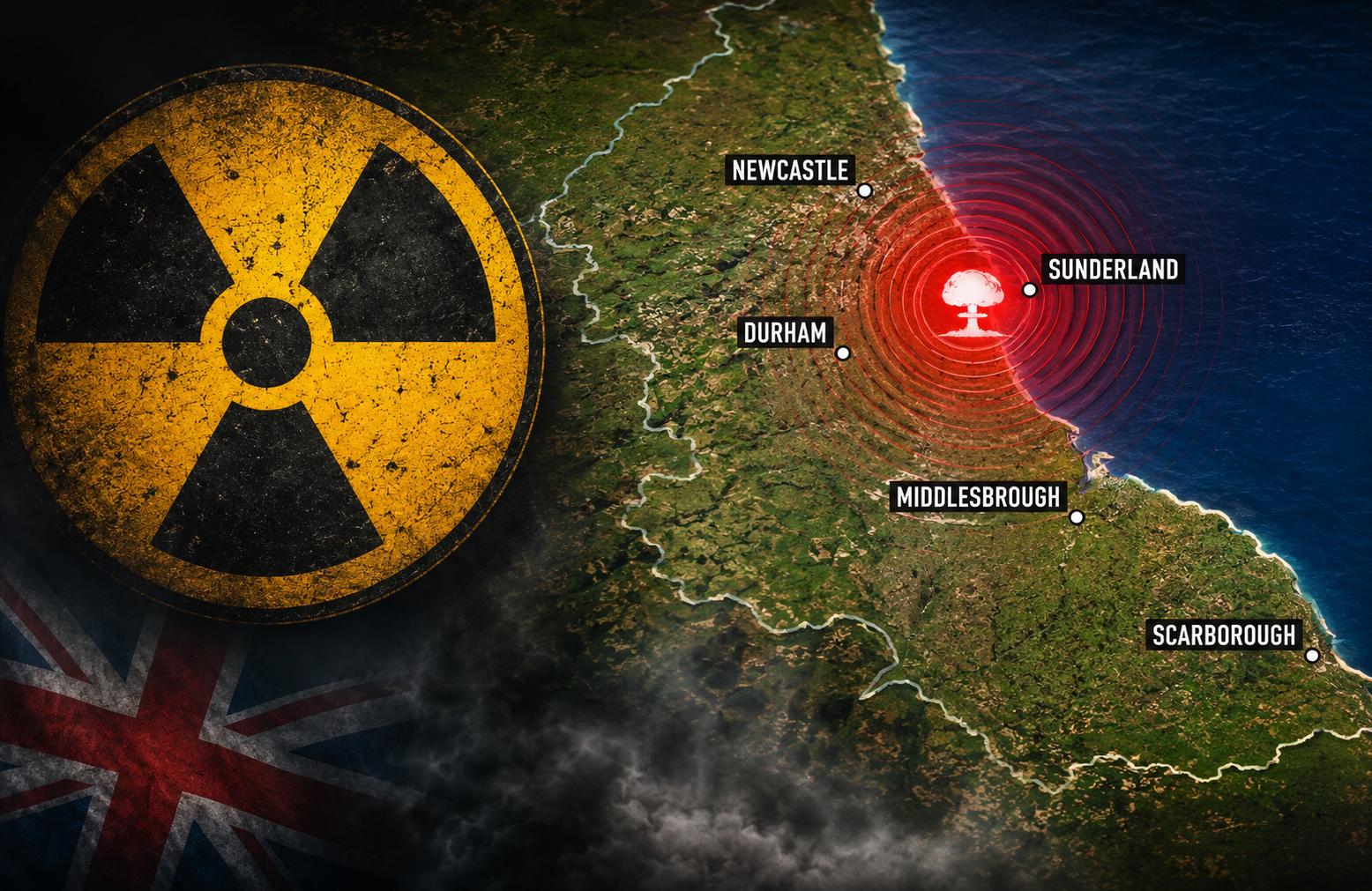
A chilling declassified Russian map has revealed the extensive list of locations across the UK that Soviet Russia considered potential nuclear targets in the event of war, including North-East city.
The documents, originally prepared in 1972 and later released through the National Archives, identify 106 locations that could have been struck by nuclear missiles if tensions between the Soviet Union and the West had escalated into full-scale conflict. The revelations offer a stark reminder of how close Britain once stood to catastrophe during one of the most dangerous periods in modern history.
At a time when global tensions continue to rise amid ongoing conflicts involving Russia, Ukraine, Iran and the United States, the resurfacing of the so-called Soviet “nuke map” has reignited public interest in Britain’s Cold War preparedness.
The classified plans were signed off under the government of former Prime Minister Edward Heath, as UK defence officials assessed which parts of Britain would likely face attack in the event of nuclear war with the Soviet Union.
Major UK Cities Among Primary Targets.
According to the documents, major population centres across Britain were considered likely targets because of their economic, industrial and political importance.
Central London was identified as one of the highest-priority areas, alongside other major cities including Birmingham, Glasgow, Manchester, Liverpool, Edinburgh, Sheffield, Coventry, Leeds and Sunderland.
The list also included densely populated areas such as Leicester, Hull, Wolverhampton, York, Huddersfield and Southampton.
Experts believe these cities were chosen not only because of their large populations but also due to their strategic value. Many housed manufacturing industries, transport infrastructure or military facilities that would have been considered essential during wartime.
The documents suggest Soviet planners intended to cripple Britain’s ability to respond by targeting both civilian and military infrastructure simultaneously.
RAF Bases and Military Sites Also Marked.
Beyond cities and towns, the map revealed that Britain’s military network would have faced devastating attacks.
The declassified records showed that at least 23 RAF bases, 14 United States Air Force bases, 10 radar stations, eight military command centres and 13 Royal Navy bases were all considered potential targets.
Several of the RAF bases named in the released documents played critical roles during the Cold War. RAF Fylingdales, for example, was a vital early-warning radar station designed to detect incoming ballistic missiles. RAF Menwith Hill also held major intelligence significance because of its links to signals monitoring and communications.
Other military locations identified included RAF Coningsby, RAF Waddington, RAF Scampton and RAF Catterick.
Naval bases such as Faslane and Devonport were also listed, reflecting the Soviet Union’s focus on neutralising Britain’s nuclear submarine capability and wider naval operations.
The documents warned that up to 150 nuclear missiles could strike Britain during a large-scale Soviet assault, alongside additional attacks launched from submarines positioned offshore.
Cold War Fears Dominated the 1970s.
The map emerged during a period of extreme tension between NATO and the Soviet Union.
Throughout the Cold War, both sides prepared for the possibility of nuclear conflict, with governments investing heavily in military infrastructure, fallout planning and civil defence systems.
During the early 1970s, fears of nuclear war remained widespread despite temporary periods of diplomatic easing between East and West.
Britain’s strategic alliance with the United States made it a key target in Soviet military planning. American airbases stationed across the UK would likely have played a major role in any NATO response, making them priority strike locations.
The declassified files reveal the extent to which the British government expected the country to become directly involved if conflict broke out between the superpowers.
Although the Soviet Union collapsed in 1991, many analysts believe modern tensions between Russia and the West have revived fears once associated with the Cold War era.
Modern Tensions Bring Renewed Attention.
Russia’s invasion of Ukraine and growing military rhetoric between Moscow and NATO countries have once again placed nuclear concerns into public discussion.
While defence experts stress that the 1972 target list would almost certainly differ from any modern military strategy, the newly highlighted documents underline how long-standing tensions between Russia and Britain have been.
Today’s defence landscape has changed dramatically, with cyber warfare, satellite technology and advanced missile systems transforming military planning. However, strategic military bases, communications hubs and political centres would still likely remain critical targets in any major conflict.
The release of the historic documents has sparked renewed debate over Britain’s preparedness for modern threats and the continuing relevance of Cold War-era defence infrastructure.
Full List of Declassified UK Targets.
The following locations were among those identified in the declassified documents as probable Soviet nuclear targets:
Belfast
Birmingham
Bristol
Cambridge
Central London
Chatham
Cheltenham
Coulport
Coventry
Devonport
Edinburgh
Faslane
Gillingham
Glasgow
Huddersfield
Hull
Leeds
Leicester
Maidstone
Manchester
Middlesbrough (Teesside)
Newcastle/Gateshead
Nottingham
Orford Ness (Suffolk)
Portsmouth
Preston
RAF Catterick
RAF Coningsby
RAF Fylingdales
RAF Greenham Common
RAF Machrihanish
RAF Menwith Hill
RAF Scampton
RAF Waddington
Rochester
Saxa Vord (Shetland Islands)
Sheffield
Southampton
Stoke-on-Trent
Sunderland
Swansea
Wolverhampton
York
Although only part of the full 106-target list has been publicly released, historians say the available information provides a sobering insight into the scale of destruction Britain could have faced during the Cold War.
More than 50 years later, the declassified “nuke map” remains one of the clearest examples of how seriously the threat of nuclear conflict shaped Britain’s defence planning during the 20th century.
Newcastle History
North-East City on Russian Nuclear Targets ‘Nuke Map’
Advertisement



Comments (0)
You must be logged in to post comments.
Don't have an account? Register here
No comments yet. Be the first to share your thoughts!