
Fresh research has revealed major differences in how police forces across Britain deal with speech-related offences, sparking renewed debate over freedom of expression and policing standards across the country.
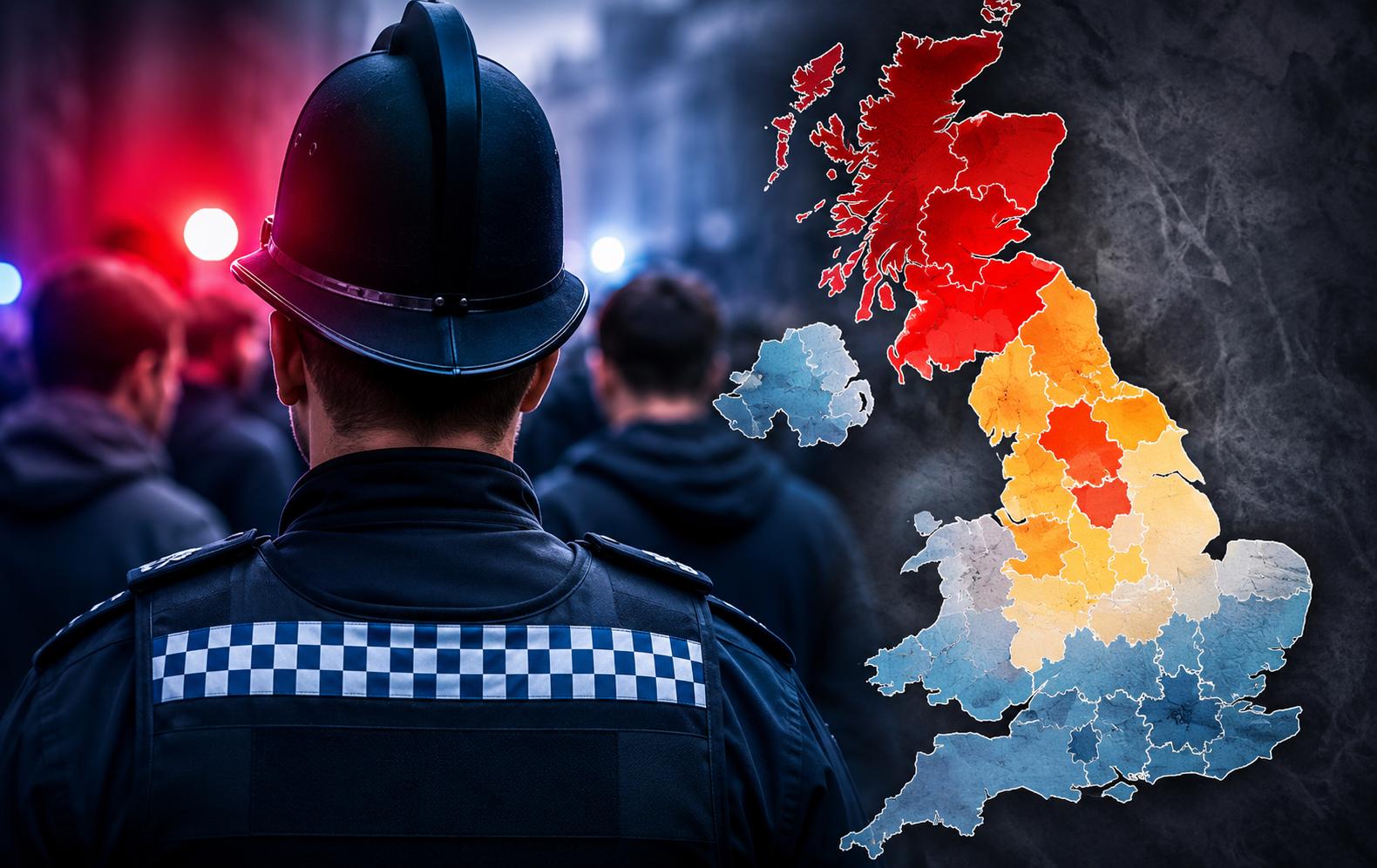
Civil liberties organisation Big Brother Watch says the findings show that a person's likelihood of being arrested for a speech offence can depend heavily on where they live. The group described the situation as a growing "postcode lottery" for free speech rights in Britain.
According to the report, more than 16,100 people were arrested across England and Wales over the past two years for offences linked to online messages, social media posts and other forms of communication. That works out at an average of around 22 arrests every day.
The arrests mainly relate to allegations involving malicious communications, harassment and offensive online content. Critics argue the laws are often too broad and inconsistently applied, while police insist they are necessary to tackle abuse, threats and intimidation.
Cumbria Records Highest Arrest Rate In Britain.
Cumbria Police recorded the highest rate of arrests for speech-related offences when population size was taken into account.
Data covering 2024 and 2025 showed the force made 7.7 arrests per 10,000 residents. In practical terms, that equals roughly one arrest for every 1,300 people living in the county. The figure was around two-and-a-half times higher than the national average.
The report also highlighted the sharp contrast between Cumbria and neighbouring Northumbria Police. Despite sharing a border, Cumbria reportedly made eight times more arrests for speech-related offences than Northumbria during the same period.
The findings have raised questions about why neighbouring police forces appear to approach the same laws in dramatically different ways.
At the opposite end of the scale, Staffordshire and Greater Manchester Police recorded some of the lowest arrest rates in the country. Both forces reportedly detained around one person in every 45,000 residents for similar offences.
Surrey Police recorded just 0.6 arrests per 10,000 residents, while Durham and Wiltshire each stood at approximately 0.8 per 10,000.
Northumbria Police Figures Draw Attention In Newcastle Upon Tyne.
Northumbria Police, which covers Newcastle Upon Tyne, Sunderland, Gateshead and much of the wider North East, recorded comparatively low arrest figures in relation to speech offences.
While the force has not released a detailed borough-by-borough breakdown, the statistics suggest residents across Newcastle and surrounding areas were significantly less likely to be arrested for malicious communications offences than people living in neighbouring Cumbria.
Northumbria Police serves a population of more than 1.5 million people across Tyne and Wear and Northumberland. The force area includes Newcastle city centre, which has one of the North East's busiest night-time economies and a large student population.
Recent Office for National Statistics data has also shown Northumbria Police handles thousands of public order and harassment-related incidents every year, although only a relatively small proportion result in arrests linked directly to speech offences.
The lower figures may fuel debate about whether Northumbria Police applies a more restrained approach when handling online communications complaints compared with other forces across Britain.
Wales Also Shows Large Regional Differences.
The research uncovered similar regional differences in Wales.
Gwent Police recorded the second-highest arrest rate nationally, with 5.85 arrests per 10,000 residents. However, nearby Dyfed-Powys Police reported a significantly lower figure of just 1.125 per 10,000.
Campaigners say these disparities highlight concerns over inconsistent policing standards and differing interpretations of communications laws.
Big Brother Watch argues the figures demonstrate that identical behaviour could potentially lead to arrest in one area but no police action in another.
Campaigners Warn Of Free Speech Concerns.
Maya Thomas, legal and policy officer at Big Brother Watch, said the findings raise serious questions about equal treatment under the law.
She said freedom of speech should apply equally across the country and warned that regional inconsistencies risk undermining public confidence in policing.
Thomas argued that some forces appear far more willing than others to use broad communications laws to justify arrests. She also claimed many members of the public remain unclear about what constitutes a criminal offence online.
The campaign group believes greater transparency and clearer legal guidance are needed to ensure police forces apply communications laws consistently.
Police Defend Investigations Into Harmful Communications.
Police forces have defended their handling of speech-related offences, stressing that many investigations involve far more serious allegations than simply offensive comments online.
Several constabularies pointed out that reports often relate to harassment, stalking, domestic abuse, coercive behaviour or threats of violence.
The Office for National Statistics has previously reported that around one-third of malicious communications offences recorded in England and Wales are linked to domestic abuse cases.
Police leaders argue officers have a duty to investigate reports where victims may face intimidation, repeated abuse or genuine fears for their safety.
Supporters of current laws say online threats and targeted harassment can have devastating real-world consequences, particularly for women, minority groups and vulnerable individuals.
Debate Over Online Speech Laws Continues.
The latest figures are likely to intensify debate over how Britain balances free speech protections with efforts to tackle online abuse and threatening behaviour.
Critics of current legislation argue vague wording within communications laws allows for inconsistent enforcement and risks criminalising lawful expression. Others believe tougher enforcement is necessary to prevent online spaces becoming hostile and dangerous.
With arrest rates varying so dramatically between neighbouring police forces, questions are continuing to grow over whether national guidelines need tightening to ensure a more consistent approach across England and Wales.
As scrutiny increases, the debate surrounding free speech, online policing and communications offences looks set to remain firmly in the national spotlight.
What do you think about the growing differences in speech offence arrests across Britain? Should police forces apply stricter national standards when handling online communication cases?
Share your thoughts in the comments and join the debate on free speech, policing and online laws in Newcastle Upon Tyne and across the UK.
Crime News
Police Speech Offence Arrests Revealed - Cumbria Tops UK List as Northumbria Records Lower Rates
Advertisement



Comments (0)
You must be logged in to post comments.
Don't have an account? Register here
No comments yet. Be the first to share your thoughts!