
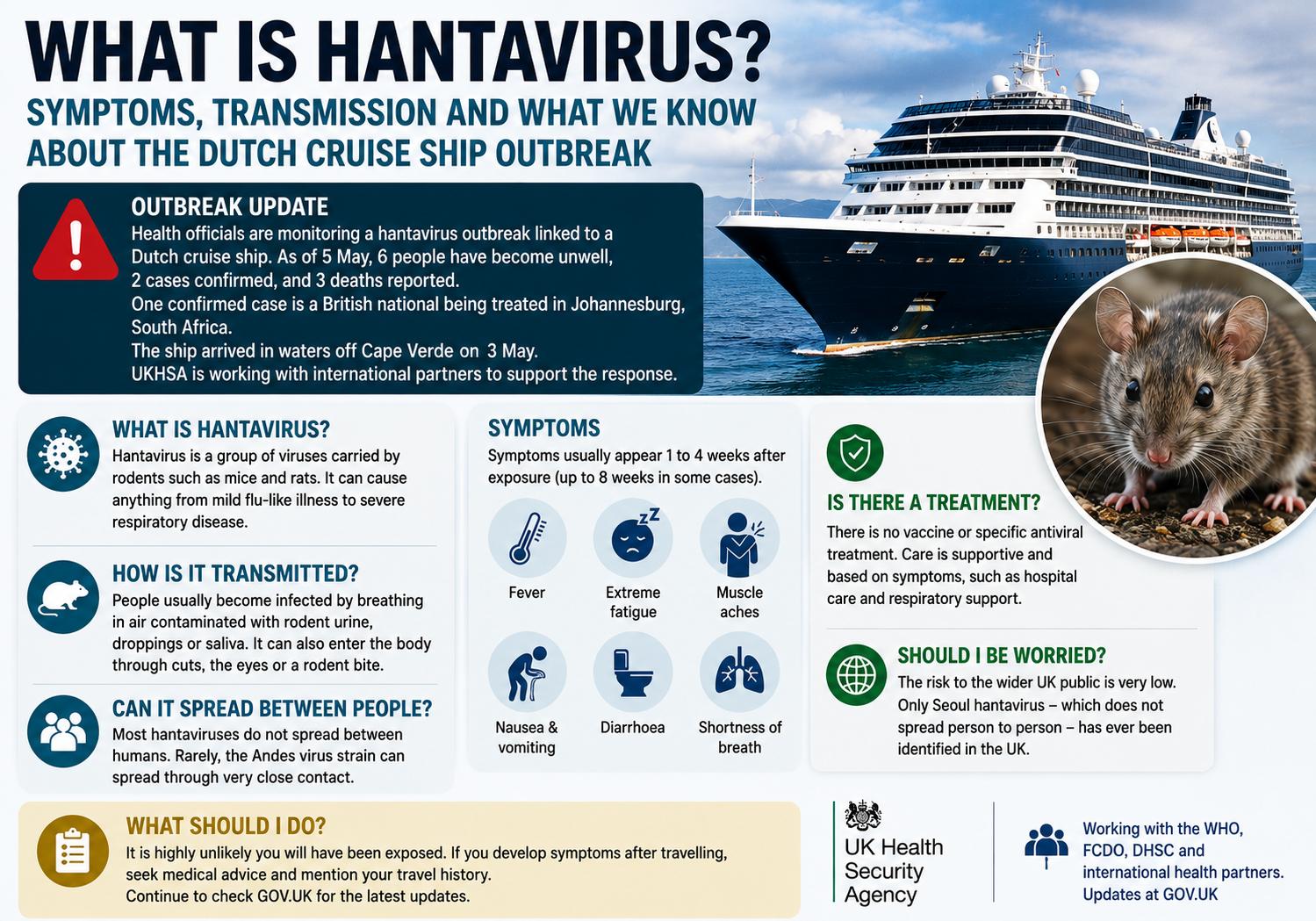
Health officials are closely monitoring an outbreak of hantavirus linked to a Dutch cruise ship after several people became seriously ill and multiple deaths were reported.
The UK Health Security Agency (UKHSA) confirmed it is working alongside international health authorities following reports that six people connected to the ship have fallen unwell, with two cases officially confirmed as hantavirus infections.
Tragically, three deaths have also been reported in connection with the outbreak.
One of the confirmed patients is a British national currently receiving treatment in Johannesburg, South Africa.
The cruise ship arrived in waters off Cape Verde on May 3, with a number of British passengers believed to be onboard.
As investigations continue, many people are now asking the same questions: what exactly is hantavirus, how dangerous is it, and should travellers or the wider public be worried?
What Is Hantavirus?
Hantavirus is not a single virus, but a group of viruses mainly carried by rodents such as rats and mice.
The viruses are typically spread through contact with rodent urine, droppings or saliva and can cause illnesses ranging from mild flu-like symptoms to severe respiratory disease.
Hantaviruses exist in different parts of the world, including areas of Europe, Asia, Africa and the Americas.
Some strains are relatively mild, while others can lead to serious complications affecting the lungs, kidneys or cardiovascular system.
How Do People Catch Hantavirus?
Most people become infected after breathing in tiny virus particles released into the air from contaminated rodent droppings or urine.
This can happen in places where rodents are present, particularly:
Barns and sheds
Agricultural buildings
Rural homes
Cabins and holiday properties
Storage areas with rodent infestations
In some rare cases, infection can also happen through:
Rodent bites
Touching contaminated surfaces before touching the eyes or mouth
Exposure through cuts in the skin
In the UK, occasional cases of Seoul hantavirus have been linked to pet rats.
Can Hantavirus Spread Between Humans?
In most cases, hantaviruses do not spread from person to person.
However, one particular strain - known as Andes virus - has been linked to rare cases of human-to-human transmission through very close and prolonged contact.
At this stage, officials have not confirmed which hantavirus strain is involved in the Dutch cruise ship outbreak.
That means investigators are still trying to determine whether the outbreak could involve a strain capable of limited person-to-person spread.
The World Health Organization (WHO) and UKHSA say investigations remain ongoing.
What Are the Symptoms of Hantavirus?
Symptoms can vary depending on the strain and severity of infection, but early signs often resemble flu or a viral illness.
Common symptoms include:
Fever
Extreme tiredness
Muscle aches
Headaches
Stomach pain
Nausea and vomiting
Diarrhoea
Shortness of breath
In more severe cases, patients can develop serious breathing difficulties that require hospital treatment and respiratory support.
Symptoms usually appear between one and four weeks after exposure, although in some reported cases they have taken up to eight weeks to develop.
Is There a Cure or Vaccine?
Currently, there is no specific antiviral treatment or vaccine available for hantavirus infections.
Treatment instead focuses on managing symptoms and supporting the patient while the body fights the infection.
In severe cases, this may include:
Oxygen support
Intensive care treatment
Intravenous fluids
Respiratory assistance
Doctors say early medical attention can improve outcomes, particularly in cases involving breathing complications.
What Is UKHSA Doing?
The UK Health Security Agency says it is actively monitoring the outbreak and working with international partners, including:
The World Health Organization (WHO)
The Foreign, Commonwealth and Development Office (FCDO)
The Department of Health and Social Care (DHSC)
Overseas health authorities
Officials are also supporting contact tracing efforts and helping identify anyone who may have had close contact with infected individuals.
The WHO is continuing to publish updates as more information becomes available.
Should People in the UK Be Worried?
At the moment, UK health officials stress that the risk to the wider public remains very low.
Only Seoul hantavirus - a strain not known to spread between people - has ever been identified in the UK.
UKHSA also emphasised that hantavirus is not spread through casual everyday contact such as:
Walking through public spaces
Shopping
Using public transport
Attending schools or workplaces
Where rare person-to-person transmission has occurred elsewhere in the world, it has involved prolonged and very close contact with an infected individual.
Health officials say no additional precautions are currently needed for the general public.
What Should You Do If You Think You’ve Been Exposed?
Experts say it is highly unlikely most people in the UK will have been exposed to hantavirus.
However, anyone who has recently travelled and develops symptoms such as fever, breathing difficulties or severe flu-like illness should seek medical advice and mention their travel history.
The public is also being encouraged to follow updates from GOV.UK and official health agencies as investigations into the cruise ship outbreak continue.
Health News
What Is Hantavirus? Symptoms, Transmission and What We Know About the Dutch Cruise Ship Outbreak
Advertisement




Comments (0)
You must be logged in to post comments.
Don't have an account? Register here
No comments yet. Be the first to share your thoughts!