
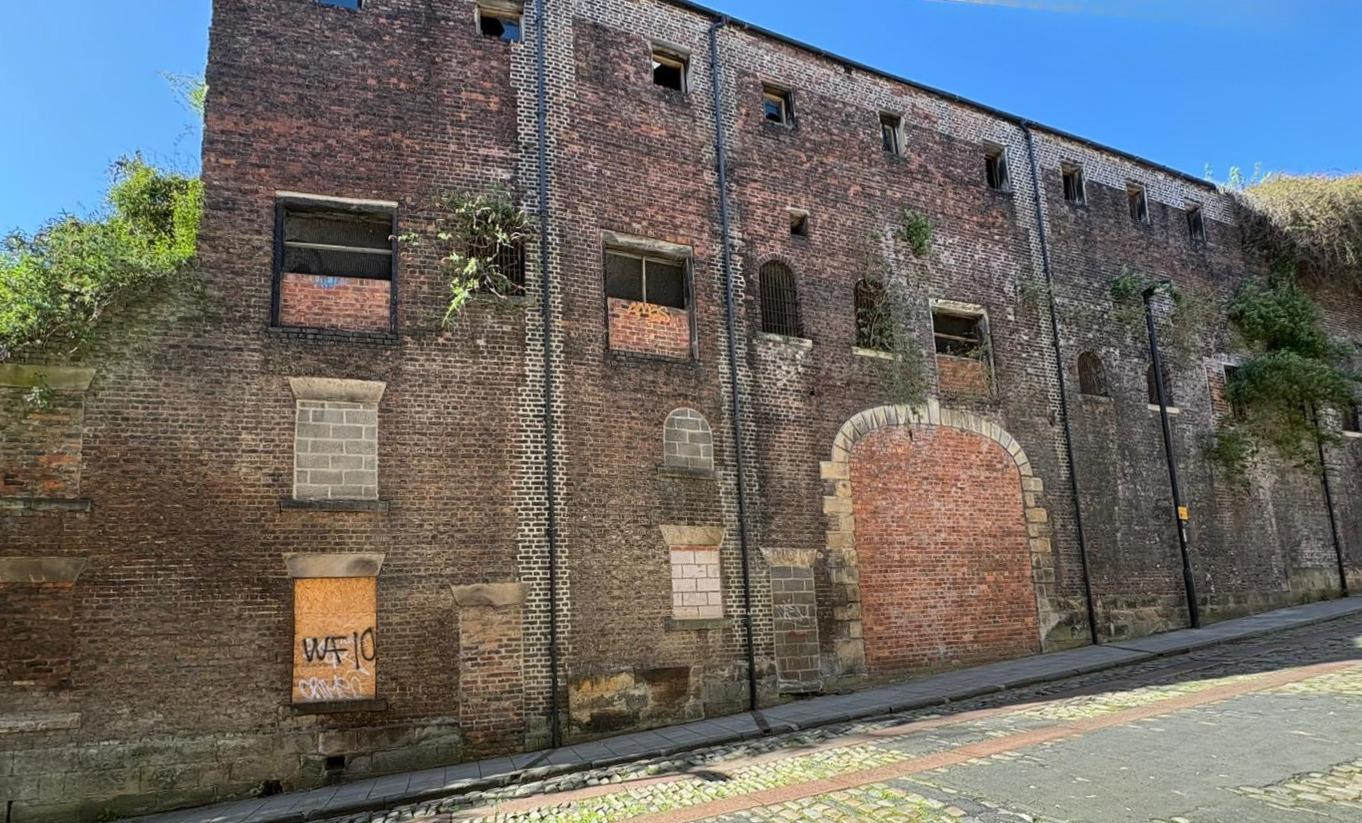
A crumbling piece of Newcastle’s industrial history has been handed a major boost after funding was approved to help save the landmark building from collapse.
The Grade II-listed Coppersmith’s Shop, located close to Newcastle Quayside and behind Central Station, has secured £65,000 for urgent surveys and technical studies aimed at preserving the historic structure for future generations.
The former industrial workshop played a key role during the height of Britain’s railway revolution and was once part of the globally renowned Robert Stephenson & Co. Works. Historians say the site helped shape Newcastle’s reputation as one of the birthplaces of modern rail transport.
After sitting abandoned for decades and falling into severe disrepair, there is now renewed optimism that the building could become one of the standout heritage attractions within the fast-growing Stephenson Quarter development.
Railway Heritage Site Played Major Role In Industrial Revolution.
The Coppersmith’s Shop dates back to the 1800s when Newcastle was emerging as a powerhouse of engineering and heavy industry.
The workshop formed part of the pioneering Robert Stephenson & Co. locomotive works, which became internationally famous for designing, building and exporting steam locomotives across the globe. The company was founded by railway engineer Robert Stephenson, son of George Stephenson, widely regarded as the father of the modern railway.
Inside the Coppersmith’s Shop, skilled workers produced vital copper components used in steam locomotives. This included boiler pipes, fittings, cab fixtures and other essential engineering parts needed to power the railway age.
At its peak, the Stephenson works employed thousands of workers and helped drive economic growth across Newcastle and the wider North East. Locomotives built on the site were shipped worldwide, helping establish Britain as the leading force in railway engineering during the industrial revolution.
However, following the eventual closure and relocation of industrial operations from the area, the building was left vacant and slowly deteriorated over many years.
Funding Marks Crucial Step Towards Restoration.
The newly announced funding package will support detailed structural surveys and technical investigations into the condition of the building.
Experts hope the studies will provide a clear roadmap for stabilising the site and developing long-term restoration plans.
Historic England confirmed the grant is designed to help unlock the future potential of the building while preserving its historic character.
Jules Brown, Historic Places Adviser for Historic England, said the organisation is eager to learn more about the site’s significance and support efforts to bring it back into use.
He described the building as a fascinating reminder of Newcastle’s railway heritage and said the funding would create the best opportunity for a sensitive restoration project.
The announcement has been welcomed by heritage groups and regeneration leaders who have long argued the building should be preserved rather than demolished.
Stephenson Quarter Transformation Continues.
The Coppersmith’s Shop sits within the wider Stephenson Quarter regeneration area, one of Newcastle city centre’s most ambitious redevelopment projects.
Located directly behind Newcastle Central Station, the site combines historic railway buildings with modern commercial, residential and leisure developments.
Newcastle City Council and development partner igloo have already overseen the restoration of several important structures across the former railway works.
The Boiler Shop has become a successful events venue and social destination, while the historic Pattern Shop has also undergone extensive refurbishment as part of the regeneration programme.
Further development plans include new housing at Orchard Yard and the construction of One Founders Place, a major office building expected to attract additional investment and employment into the city centre.
The wider regeneration project is seen as a key part of Newcastle’s economic growth strategy, combining heritage preservation with modern urban development.
Hundreds Of Jobs Already Created In Newcastle Development.
Stephenson Quarter has already delivered significant economic benefits to Newcastle upon Tyne.
Digital bank Atom Bank relocated its headquarters to the site in recent years, bringing around 600 jobs into the area and helping establish the quarter as an emerging business hub.
City leaders believe hundreds more jobs could be created as future phases of the development move forward.
The area’s close proximity to Newcastle Central Station and the Quayside has also increased interest from investors, businesses and tourism operators looking to capitalise on the site’s unique industrial heritage.
Restoring the Coppersmith’s Shop could add another major attraction to the development, potentially boosting visitor numbers and strengthening Newcastle’s growing heritage tourism sector.
According to Newcastle City Council tourism figures, millions of visitors travel to the city each year, with heritage attractions and cultural sites playing an increasingly important role in the local economy.
Heritage Campaigners Hope Building Can Be Reused.
Conservation groups say restoring historic industrial buildings is vital for protecting Newcastle’s identity and preserving the story of the North East’s engineering past.
Rather than leaving the site empty, campaigners hope the Coppersmith’s Shop can eventually be transformed into a publicly accessible space that celebrates the city’s railway achievements.
Potential future uses could include exhibition areas, creative workspaces, heritage attractions or hospitality venues connected to the wider Stephenson Quarter development.
Many supporters believe restoring the building would not only protect an important historical landmark but also create new opportunities for tourism, education and business growth.
The latest funding now provides renewed hope that one of Newcastle’s forgotten industrial buildings may soon have a future once again.
Newcastle’s Industrial Past Could Shape Its Future.
As regeneration continues across Newcastle city centre, projects like the Coppersmith’s Shop restoration highlight the growing effort to balance modern development with historic preservation.
For many residents, protecting landmarks connected to the industrial revolution is about more than preserving old buildings. It is about safeguarding the city’s identity and recognising the role Newcastle played in shaping global engineering history.
If restoration plans move forward successfully, the once-derelict workshop could soon become another symbol of Newcastle’s transformation from industrial powerhouse to modern heritage destination.
Would you like to see more of Newcastle’s historic industrial buildings restored instead of demolished? Share your thoughts in the comments and join the conversation about the future of Stephenson Quarter.
Local News
Historic Newcastle Railway Building Given New Hope After Years Of Decay.
Advertisement





Comments (0)
You must be logged in to post comments.
Don't have an account? Register here
No comments yet. Be the first to share your thoughts!